
Going bats at Chiswick House & Gardens
To celebrate our annual Bat Walk, we invited Joanne Gilbert, Founder & Chair at Wild Chiswick to write about these elusive creatures. Read on to learn about the rare species that call our Gardens home, why they’re important to the ecosystem and what you can do to make your gardens bat-friendly.
Bats are a very important species across the world where they act as pollinators, eat millions of insects, help spread seeds which grow into new plants and trees, as well as being key indicators of a healthy ecosystem. There are over 1,400 species of bat worldwide, with 18 species present in the UK. All bat species in the UK are insectivorous and provide an important natural service to agriculture and gardeners alike by eating millions of insects, bugs, spiders and arthropods. For example, a lone pipistrelle can eat approximately 3,000 insects each night!
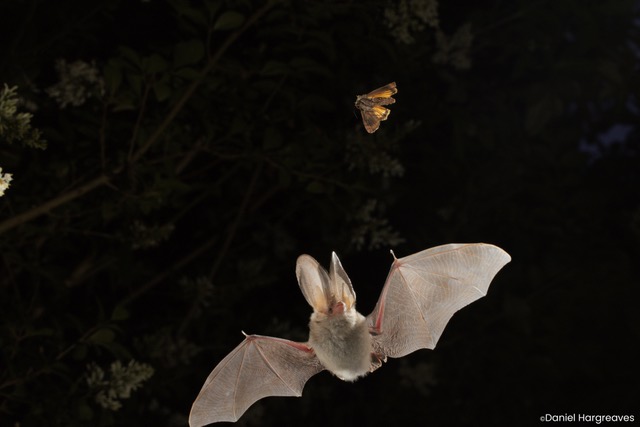
The bats in Chiswick House & Gardens
Different bat species enjoy different habitats, varying from open ground, woodlands, large water bodies and wetlands. Chiswick House & Gardens, with 62 acres of land, provides these habitats.
In 2021, the Chiswick House & Gardens Trust was keen to restart their evening bat walks. Working with London Bat Group, WildChiswick undertook the recording of bats across the gardens.
London Bat Group installed and analysed recordings from Audiomoth detectors across 3 different sites within the grounds. The following species were identified:
common pipistrelle
soprano pipistrelle
noctule
Leisler’s
Daubenton’s
Long eared brown
Natterers’
Serotine
Some favourites
Brown long-eared bat
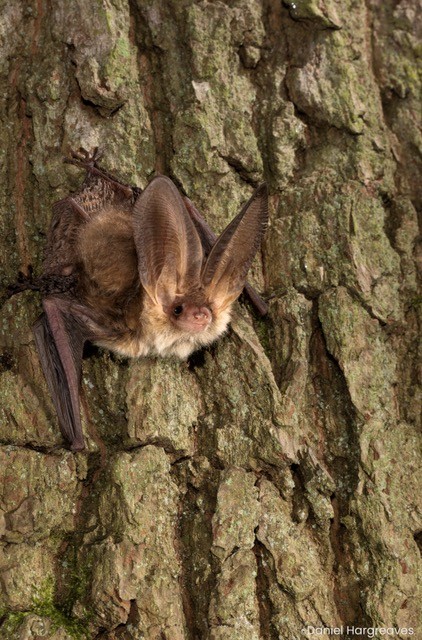
For me, the most exciting find was the brown long-eared bat. They are only periodically found in London, so you can imagine our excitement to find recordings of them in Chiswick House & Gardens!
This species has very long, incredibly sensitive ears, used to listen for insects. Their ears are so sensitive, they can hear insects that are amongst leaves on the ground. They are known as the “whispering bat” because their echolocation is quiet, helping them to listen for prey whilst still communicating with each other. They will roost in old trees and buildings with the females only producing one bat pup per year.
Suitable habitats for this species are becoming scarce. Noise, loss of woodland and increased light pollution are all problems.
Daubenton’s
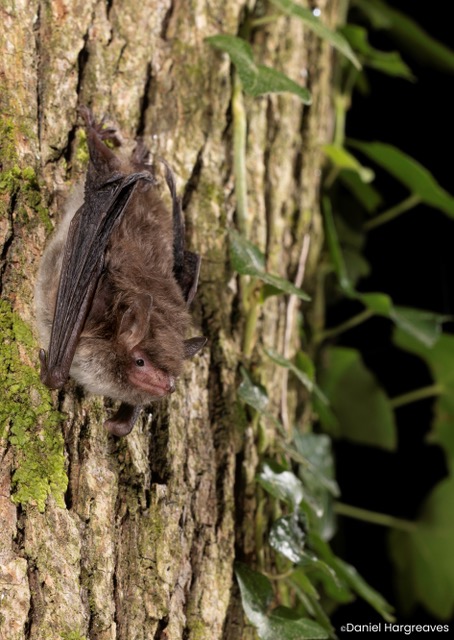
Since the Bat Walks were resumed within the gardens, this bat is frequently heard and seen swooping for insects over the lake. They are a terrific sight to see!
This species flies close to the surface of the water and use their large feet and the membrane of their tail to catch their prey. They like to hibernate underground in caves, man-made cellars and tunnels. If underground hibernation sites cannot be found, they may hibernate in building or trees crevices.
The loss of diversity of aquatic insects could have a detrimental effect on this species. Without controlling pollution, keeping and maintaining lake and riverside trees and avoiding destruction of hibernation habitats, this species could become under threat.
What to do to help bats
Chiswick House & Gardens appears to be an important green oasis for our local bats. Your garden can also help these wonderful creatures:
- Plant to attract insects.
- Think about scented plants to attract night moths.
- Keep trees and maybe put up some bat boxes.
- Close your curtains at night to reduce light pollution and reduce the amount of time you leave on your outdoor lighting.
Every positive action can help!
References:
Bat Conservation Trust, https://www.bats.org.uk
Philip Briggs, London Bat Group. Chiswick House & Gardens Bat Monitoring, August 2021
Photographs: Daniel Hargreaves, Vincent Wildlife Trust
Cover photo: Sourced via Wikimedia Commons

