Are these the two most important trees in the gardens?
Rosie Fyles, Head of Gardens, at Chiswick House and Gardens, writes on plants, nature, seasons: the latest from our local green haven every month.
Written for The Chiswick Calendar
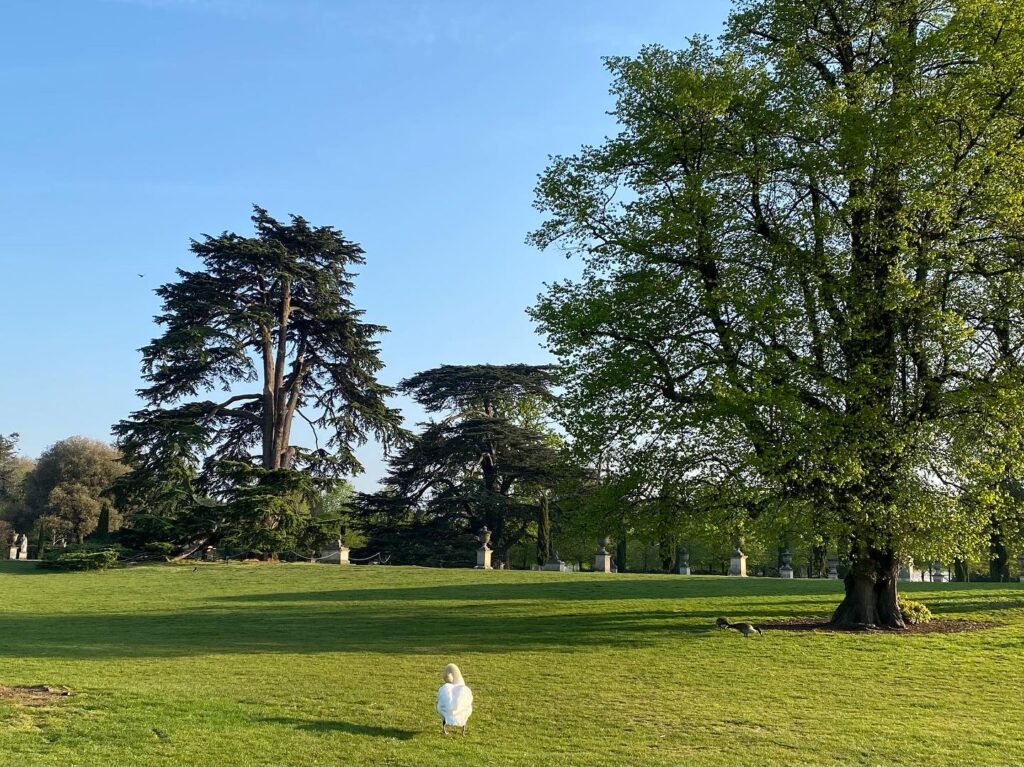
Are these the two most important trees in the gardens?
The answer to this question can be highly personal – trees are so often part of childhood memories (climbing, picking, hiding), providing a quiet yet imposing presence to daily dog walks or measuring the seasons for us in their own, reliable yet still surprising ways.
I would suggest that the two cedars at Chiswick might be our most important trees in terms of history, scale, presence in the landscape, profile and what they mean to so many.
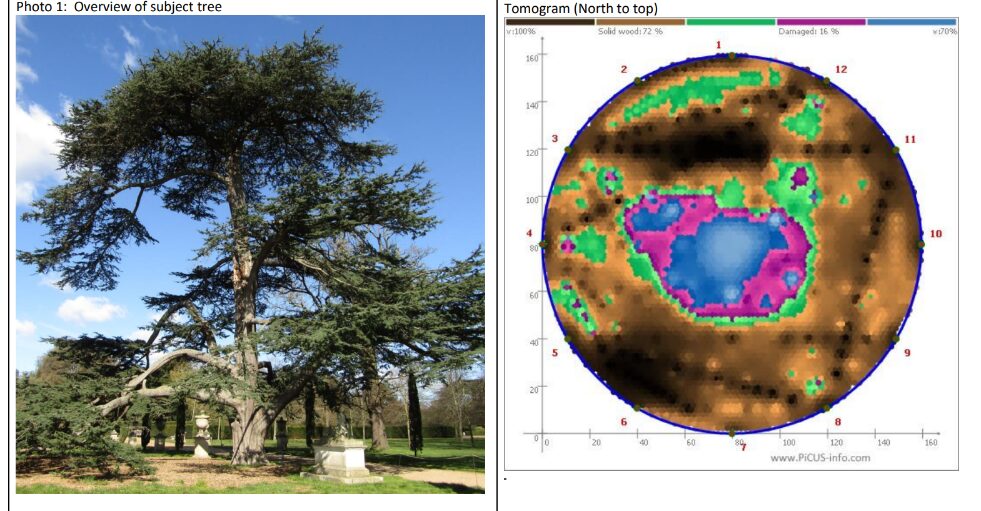
They are important and ageing, beyond their prime in tree health terms. They show signs of stress and disease so recently, we undertook ‘a picus survey’, basically like an ultrasound, of both these trees. The test measures the speed of sound waves through the trees’ stem, enabling a detailed picture of the trees’ condition. We have been able to undertake this survey thanks to the generosity of local donations during Big Give in December last year. I am grateful to all those that share a love of trees.
The process involves installing sensors around the tree’s trunk using tiny nails. Each sensor is tapped gently to send sound waves through the tree. The speed at which these sound waves travel helps understand the density of the wood within. If the sound travels slowly, it indicates decay or hollow sections. The resulting data is compiled into a tomogram – a ‘map’ that shows the condition of the wood inside the tree.
What did the testing tell us?
One tree (away from the path) is struggling with disease and decay more than the other. We need to be monitoring it closely over the next years. Long term, we need to be planning for what happens as it declines further. Our commitment is first to safety, and then to enabling our oldest and most beautiful trees to live as long as possible, supporting habitat and carbon capture. We will care for it as long as we can as it changes shape and size.
It’s very hard to consider the Gardens without it…
If you’re going to RHS Chelsea Flower Show this year…
First, I must encourage you to visit The Plant Heritage Missing Collectors’ Garden, co-designed by Chiswick House & Gardens’ very own Kate Campbell. It’s possible I might be allowed to plant a few things in it the week before.
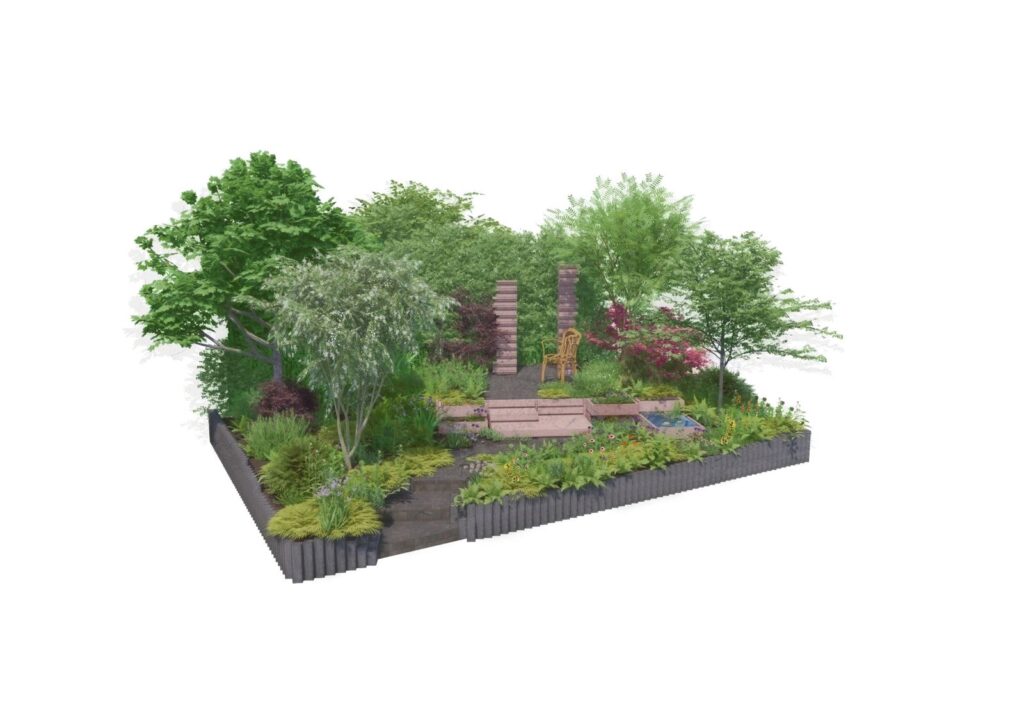
Second, spare a thought for how historic gardens (and their makers and gardeners) are influencing contemporary gardens and garden designers today. I see links right back to our 17th century walled Kitchen Garden in the tea plants, UK cut flowers, beehives and pleasure gardens and to the 18th-century landscape garden, its statues and features in bringing nature, landscape and the arts together, beautifully.
What I’m doing in my own garden this month:
I am emptying the water butt by watering the newly planted, the pots and the rhubarb. I think everywhere feels dry already, which given the recent winter is concerning. Long, dry summer ahead?
What to look out for in Chiswick House & Gardens:
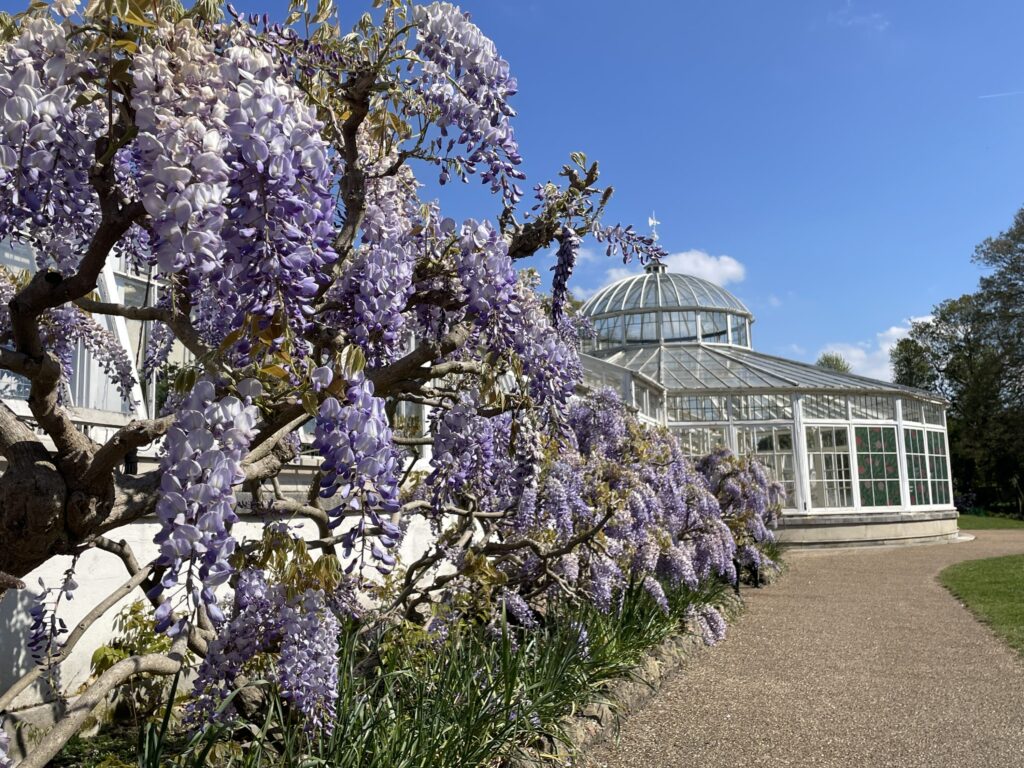
Everywhere you look you should see the mighty momentum of spring this year – wisteria blooming around the conservatory, camellias flowering throughout the shrubbery, roses budding in the rosary, lime green leaves unfurling and growing on nearly every tree now, almost as you walk past. Come for a walk, it might be over quite quickly…