
“We want to make the planting more of an immersive experience” – Meet gardener Freya, redesigning the Italian Garden
Gardener Freya talks about the ambitious redesign of the Italian Garden, why it’s needed now, and how the space’s history is shaping its future.
“The Italian Garden is one of the most formal, ornamental, and historically rich parts of Chiswick House & Gardens. That means there is huge potential for it to be an engaging and visually exciting space, and at the same time there are some quite difficult challenges when it comes to fulfilling that potential and looking after the garden now and into the future. When I took on the responsibility of managing the Italian Garden in April this year, Head of Gardens, Rosie, and I decided to develop a new design for the space that would tackle these challenges head-on.
“The most visually obvious one is the deteriorating conservatory that runs the whole north length of the Italian Garden. The two were originally designed together and have always been in dialogue with one another. At the moment, though, the conservatory is in a poor state of repair and is closed to the public due to safety. The future life of the conservatory is currently under review, and in the meantime we want to soften the impact of its deterioration by revitalising the planting around it.
We want to make the planting more of an immersive experience, creating more spaces for people to sit and just enjoy being there.

“Another key reason for remaking the garden now is climate change, which we’ve really seen the effects of this summer – one of the severest droughts on record. We’re likely to get more hot, dry summers and milder, wetter winters and we need to respond to that by making the planting scheme more resilient for the future. This means using more drought-tolerant species, many from Italy and the Mediterranean, selecting species with high value for pollinators, using more groundcover to shade the soil, planting in sunken beds rather than on raised mounds, and incorporating grit to improve drainage and promote deep root growth. We’re also going to trial alternatives to traditional lawn and introduce more trees to provide shade and natural cooling.
“Future resilience needs to take into account maintenance requirements as well as climate. At the moment the space is onerous to maintain. There’s a lot of fiddly mowing, meters and metres of lawn edges to keep trimmed, near-constant weeding due to large areas of bare soil in the traditionally planted rose beds and masses of deadheading. The scale of the garden and the high aesthetic standard required in a formal ornamental garden mean that keeping up with presentation is very time-consuming. The changes we’re making – rationalising lawn areas, reducing edges, increasing ground cover planting, for example – should make it more efficient to look after.
“As well as making it more practical for gardeners, a really important part of the redesign is making the garden more practical for visitors – we need to make it more inclusive and more usable. At the moment it’s a popular route for people passing through, but they don’t tend to linger. It’s very open and exposed, there’s very little shade, and the feel of the space doesn’t really invite you to explore or sit. We are going to create more spaces to relax in the shade, widen entry routes into planted areas, and make the planting a more immersive experience, with a layout and with species that are more interesting and engaging for different audiences.
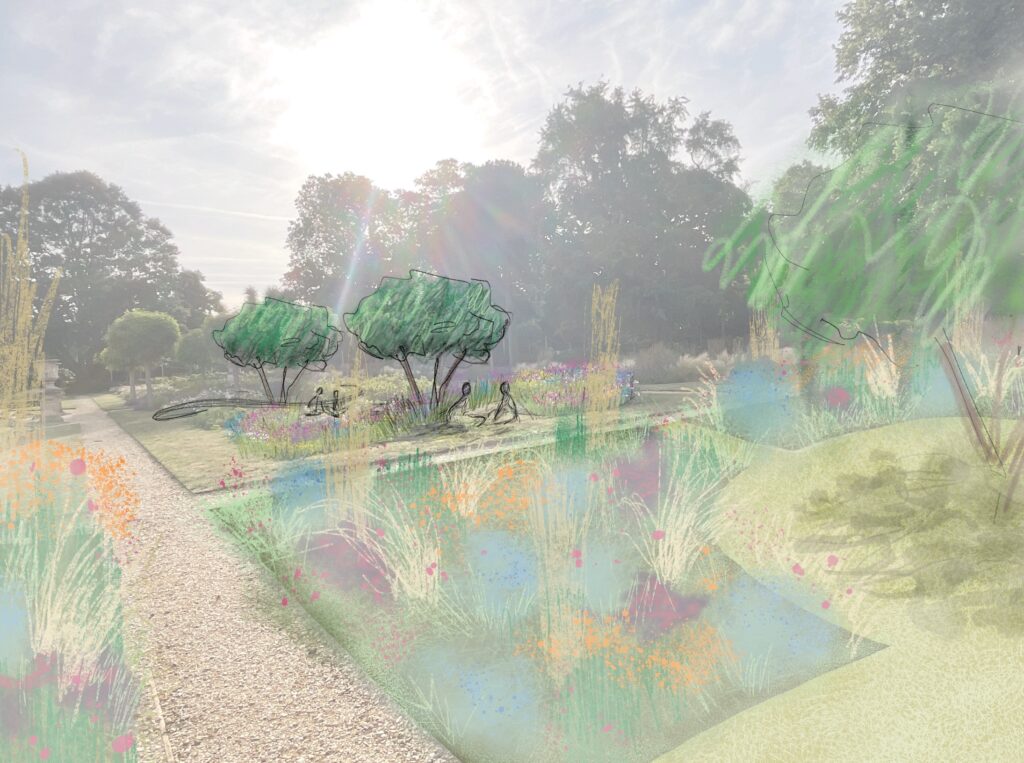
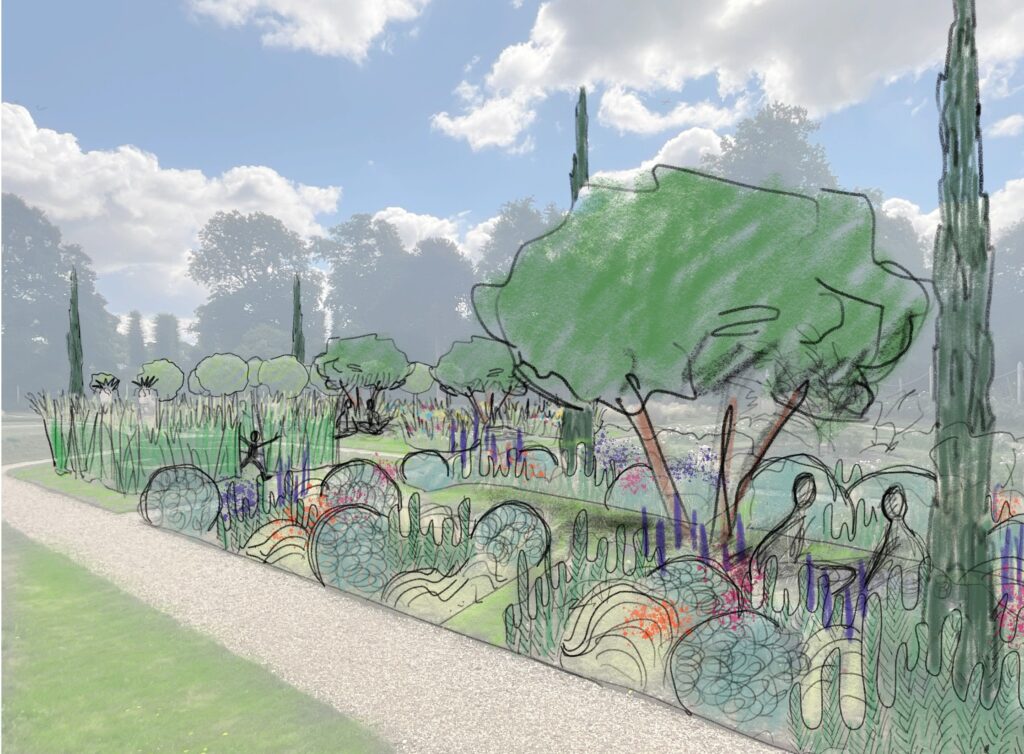
“The main principles guiding the redesign, then, are honouring the garden’s heritage, increasing resilience to climate change, increasing inclusivity and visual impact, increasing biodiversity and increasing maintenance efficiency.
“The current layout of the Italian Garden still reflects the original one, which was designed in 1814 by Lewis Kennedy in the ‘Italian style’ – a formal style that emphasised geometry, views and architectural features. The layout was simplified in the 1830s by the head gardener at the time, to make it easier to maintain. Our design combines both versions, in a contemporary interpretation, and brings back reference to elements of the 1814 layout that were dropped in the 1830s. So the new design will reflect the garden’s full heritage more than what’s currently there.
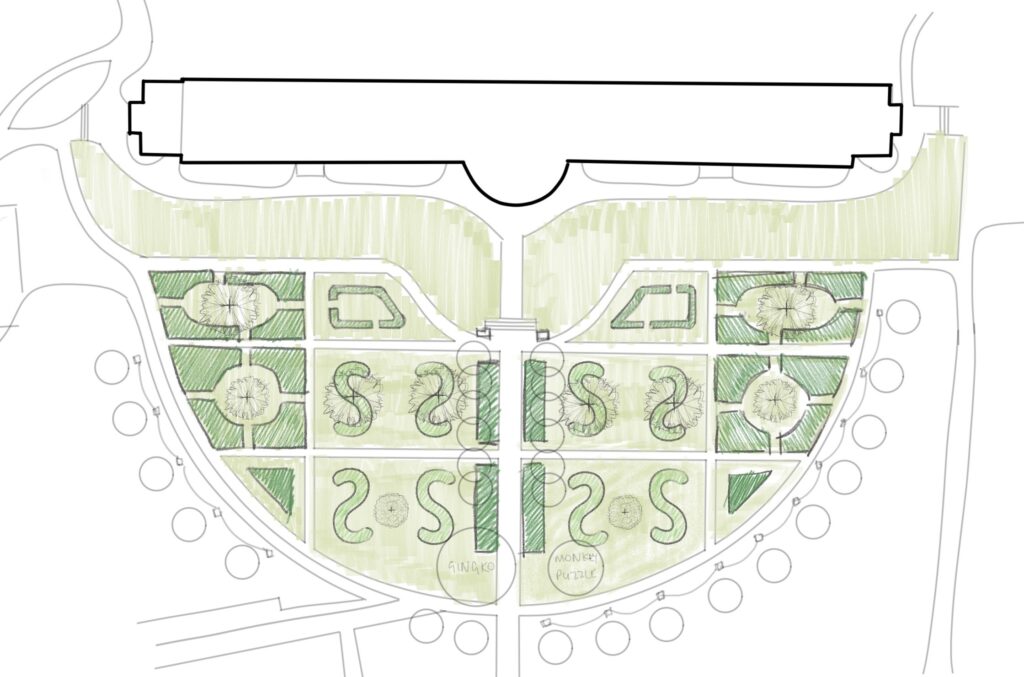
“The project has been a really interesting and rewarding process so far. I enjoyed the challenge of the historic side of the brief – the research we did into the garden’s history, thinking creatively about how to keep that running through the design while adapting it for the present and future – and the ecological and creative thinking that has shaped the planting scheme. There’s been a lot of creative problem-solving too, in terms of the practicalities – really thinking about how to make the space work better for everyone, for the people who visit and for the garden team looking after it. And there’s something exciting about making this space somewhere people really want to be, and making a contribution to the garden’s legacy, hopefully in a way that will benefit people and the environment for many years to come.
